A sales-qualified lead (SQL) is a prospect that sales has spoken to and confirmed is worth pursuing. The company fits your customer profile, the buyer has a real need, there is a reason to act soon, and the person can make or influence the decision. In short, it is a likely opportunity that sales has checked directly.
Sales-qualified lead definition: An SQL is a lead that sales has confirmed, through a direct conversation, meets the agreed criteria for fit, need, timing, and authority.
What Is an SQL in Practice?
The key word is confirmed. A good sales-qualified lead definition is about evidence from the buyer, not a score in your marketing system.
That rules out three things teams often count as SQLs by mistake:
- A high lead score. Scores predict interest. They cannot confirm a project.
- A demo request on its own. Many are from students, competitors, or people comparing prices for later.
- A filled-in BANT form. A buyer ticking “budget approved” on a form is not the same as saying it on a call.
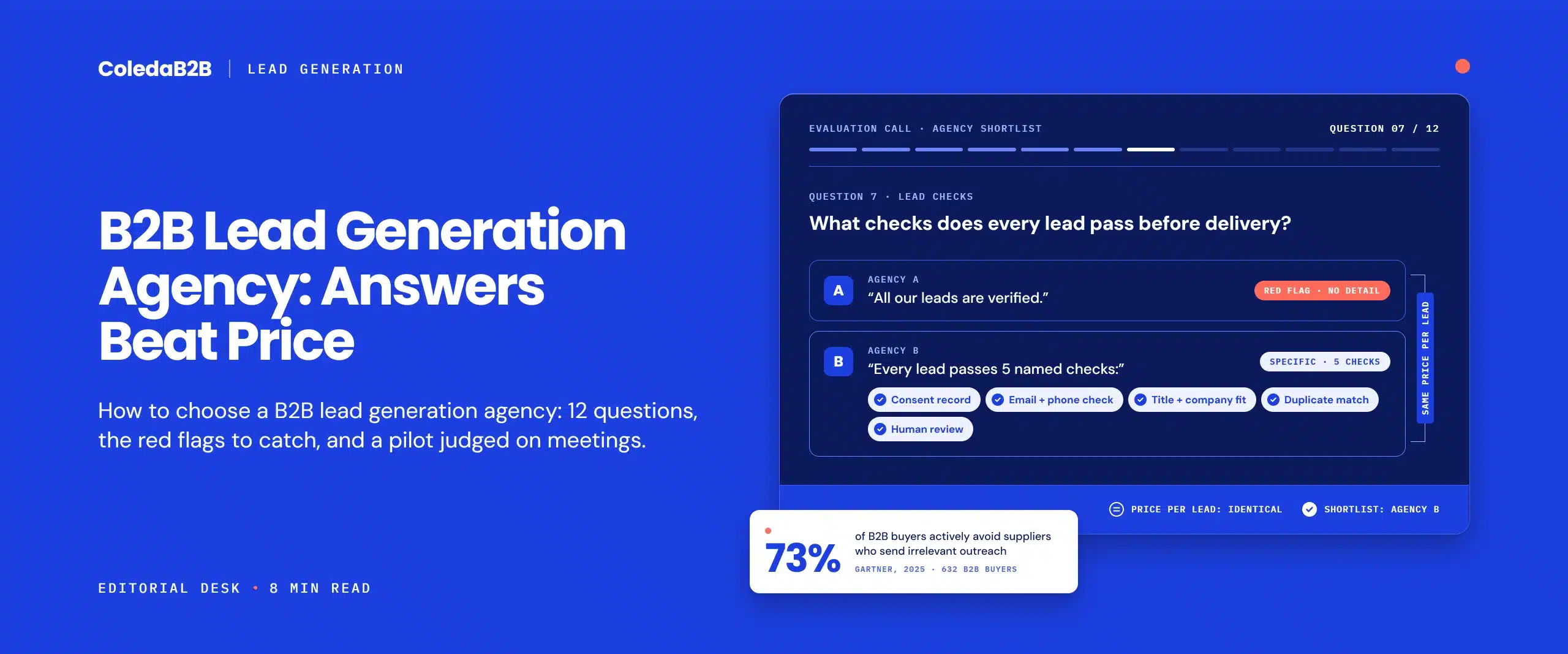
Getting this wrong has a cost beyond wasted sales time. A 2025 Gartner survey of 632 B2B buyers found that 73% actively avoid suppliers who send irrelevant outreach. Calling people who are not ready, in the wrong role, or at the wrong company makes it harder to reach them later.
The SQL sits after the MQL in the SiriusDecisions demand waterfall that many teams still use. If you need the side-by-side view, our guide on how MQLs and SQLs differ covers it.
The SQL Qualification Checklist
This checklist turns the sales-qualified lead definition into four checks. Each one comes with the question that confirms it on a call.
| Check | What it means | Question that confirms it | Confirmed when | Red flag |
| Fit | The company matches your ideal customer profile. | “Can you tell me about your team and the systems you use today?” | Industry, company size, region, and current setup match the profile. | Far outside your usual deal size or segment |
| Need | There is a problem you solve, and the buyer agrees it is a problem. | “What happens if this stays as it is for another year?” | The buyer describes a cost or risk in their own words. | “We’re just looking at what’s out there.” |
| Timing | Something gives the buyer a reason to act within a defined period. | “Is there a date or event driving this?” | A renewal, deadline, project start, or budget cycle is identified. | No date, no event, or “sometime” |
| Authority | The person makes the decision or can involve the decision-maker. | “Who else will be involved in choosing a solution?” | The decision-maker joins the call or agrees to attend the next one. | Cannot identify who makes the decision |
Fit is a gate, not a score. If the company is wrong, the other three do not matter.
Why a budget is not a separate check: few buyers will confirm a budget on a first call, and asking too early can end the conversation. Budget is better confirmed through authority: if the decision-maker is involved and the need is real, budget becomes a planning question, not a qualification question. Our guide to BANT lead qualification covers when to ask about budget directly.
Three Calls, Three Verdicts
Here is the checklist applied to three discovery calls. All three are illustrative examples, not client results.
| Check | Call A. | Call B. | Call C. |
| Buyer | VP Finance, 1,500-person manufacturer | IT Manager, 400-person healthcare group | Head of Operations, 25-person agency |
| The seller offers | Accounts payable automation | Endpoint security | Enterprise data platform |
| Fit | Yes. | Yes. | No: below minimum company size |
| Need | Yes: invoice backlog delays the month-end close. | Yes: a recent audit flagged unmanaged devices | Yes: reporting takes too long. |
| Timing | Yes: a new ERP system goes live next quarter. | Partly: “this year,” with no specific date | Yes, he wants a fix this month. |
| Authority | Yes: owns the budget; CFO signs | No: the CIO decides. | Yes, the owner is on the call. |
| Verdict | SQL | Not yet | Disqualified |
| Next step | Demo with finance and IT | Second call with the CIO to confirm timing | Recommend a lighter, self-serve option. |
Call A passes all four checks. The ERP go-live gives a real deadline, and the buyer holds the budget line.
Call B is the most common case, and the one team that handles it worst. The need is real, but timing is loose, and the decision-maker is missing. It is not an SQL yet, and it should not be dropped either. The right move is a second call with the CIO. If the CIO confirms a date, it becomes an SQL.
Call C shows why fit comes first. Three out of four checks pass, and the buyer is keen, but the company is far too small for the product. Passing it to an account executive wastes their time and leads to a deal that will not close or a customer who will not stay.
What Should an SQL Record Contain?
A sales-qualified lead definition is only as useful as the record behind it. When an SDR marks a lead as an SQL, the account executive should be able to pick it up without calling the buyer to ask the same questions again. Every SQL record should hold:
- Company name, size, and industry
- Contact name, job title, and how they fit in the decision
- Other people in the buying group, by name or role
- The need, written in the buyer’s own words
- The timing event and its date
- The decision process and who signs
- The agreed next step and its date
- The lead source and the first touch
- Who qualified the lead, and when
If a field is empty, the SQL is not finished.
Writing Your Own Sales Qualified Lead Definition
A checklist from a blog post is a starting point. Your own sales-qualified lead definition needs to reflect how your customers actually buy. Four steps get you there:
- Start from closed-won deals. Look at your last 20 to 30 wins. Note the company profile, the trigger that started the project, and who signed. That is your real pattern.
- Set the minimum for each check. Decide what counts as confirmed for fit, need, timing, and authority; in plain words, both teams understand.
- List the disqualification reasons. Wrong size, no need, no timing, no access to the decision-maker, already under contract. A fixed list makes reporting possible.
- Review it every quarter. Compare SQLs that became opportunities with those that did not, and tighten the definition where it lets weak leads through.
Get sales leadership and marketing leadership to sign the final version. A definition only one team agrees with will not hold.
How Do You Know Your SQLs Are Good?
Track these four numbers every month:
- SQL-to-opportunity rate: the share of SQLs that become real opportunities.
- Account executive acceptance: how often the AE agrees with the SDR’s SQL call after the first meeting.
- Win rate on SQL-sourced deals: whether qualified deals actually close.
- Top disqualification reasons: if one reason keeps coming up, fix it earlier in the funnel.
A falling SQL-to-opportunity rate is the earliest warning. It usually means the definition has loosened, or SDRs are under pressure to hit an SQL number.
How ColedaB2B Qualifies Leads Before Delivery
As a partner, we qualify leads against the criteria your team sets, including BANT where you need it. No lead is qualified without an opt-in, and every lead is checked by a person before delivery, alongside automated data checks. Your team receives leads with the qualification notes already attached, so the first sales call starts where ours ended.
Want to see how qualified leads arrive? We will share a sample lead file with the fields, qualification notes, and checks your team would receive.
FAQs:
A lead is sales qualified when sales confirms, in conversation, that the company fits your profile and the buyer has a real need, a reason to act soon, and access to the decision.
Not always. A BANT lead meets budget, authority, need, and timing criteria, often confirmed by a qualification call. An SQL is whatever your own definition says, which may use BANT or a different checklist.
Sales, or a sales development team working for sales. Marketing qualifies MQLs from data and behavior, but only a conversation can confirm an SQL.
Watch the SQL-to-opportunity rate, how often account executives accept SQLs, and the win rate on SQL-sourced deals. Review the top disqualification reasons each month.
Yes. Some partners, including our sales-qualified leads program, deliver leads already qualified against your criteria. Ask to see a sample file and the qualification notes before you sign.