How do you use intent data for ABM? Treat a surge as the start, not the finish. First, decode which roles the research topics point to. Then map the buying committee, reach each role with the right content and channel, and hand the account to sales once several roles engage. As a result, you reach the committee before the shortlist forms.
Definition: Intent data for ABM is the use of research signals, from your own channels and third-party sources, to choose which target accounts to focus on now and which buying roles to reach inside them.
Updated November 2026
Why an Account-Level Surge Is Not Enough
Most third-party intent data tells you that a company is researching a topic. However, it rarely tells you who. That gap matters, because B2B purchases are group decisions.
According to Forrester’s State of Business Buying 2024, an average of 13 people take part in a purchase, and 89% of purchases span two or more departments.
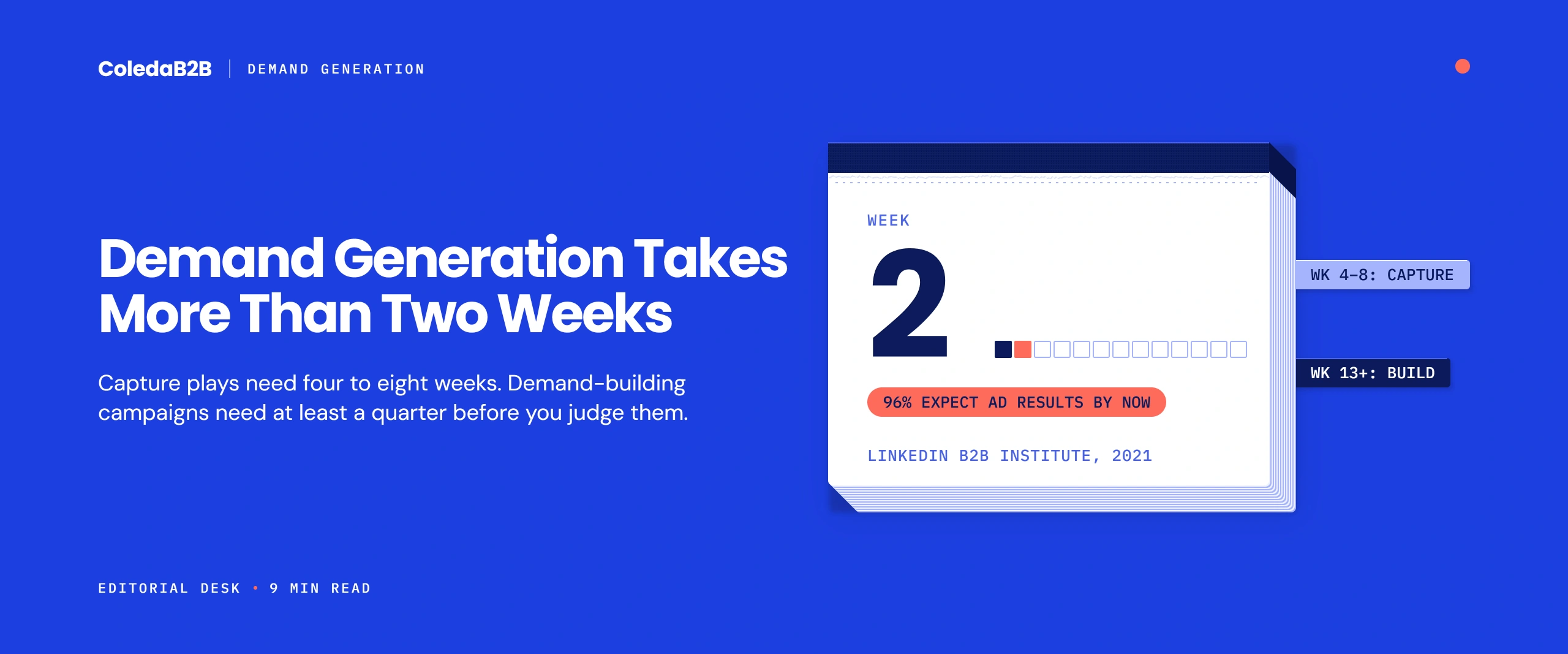
Timing is tight as well. In 6sense’s 2025 Buyer Experience Report, the winning vendor was on the buyer’s Day One shortlist 95% of the time. So when an account surges, you have little time to reach the people who will decide.
This is also where many teams using intent data for ABM struggle. Forrester’s intent data survey found that the most common challenge was identifying the right decision-makers inside an active account. For a full primer on sources and types, see buyer intent data explained.
Decode the Role From the Research Topic
Fortunately, intent topics give clues about who is reading. Therefore, you can match your first move to that role’s concerns.
| Topic being researched | Likely role | What they worry about | What to put in front of them |
| Pricing models, total cost, ROI | Finance | Cost and return | A clear ROI summary and pricing context |
| Integrations, APIs, data migration | IT | Effort and fit with current systems | Integration guides and architecture notes |
| Compliance, data security, certifications | Security | Risk | A security overview and trust documents |
| Workflows, ease of use, training | End users and managers | Daily impact | Short product walkthroughs and user reviews |
| Category comparisons, vendor alternatives | Champion or project lead | Picking the right vendor | Comparison pages and case studies |
For example, if an account surges on integration topics, lead with IT content, not a general brochure.
The Intent Data for ABM Playbook in Five Stages
| Stage | Trigger | What happens | Owner |
| 1. Detect | Third-party surge or strong first-party activity | The account moves into an active list. | Marketing ops |
| 2. Decode | Topics and pages reviewed | Likely roles are identified from the research. | Marketing |
| 3. Map | Account confirmed as a good fit | The buying committee is mapped, including roles you have not met. | SDR |
| 4. Reach | Committee map complete | Role-based ads, content, and outreach run in parallel. | Marketing and SDR |
| 5. Hand off | Several roles engaging | The account passes to sales with full context | Account executive |
Stage 3 is where most programs fall short. Too often, teams detect the surge, then email the one contact they already know. Instead, use a proper method to map the buying committee before outreach begins. Otherwise, you end up with single-threaded deals that look healthy until they stop.
Not every surge deserves the full playbook, though. Our list of signals ranked by strength helps you decide which ones do.
Intent Data for ABM: Channel Plan by Role
In practice, each role prefers different channels. So plan the reach stage role by role, rather than sending one campaign to everyone.
| Role | Best first channel | Best follow-up | What to avoid |
| Finance | Role-targeted LinkedIn ads with an ROI summary | A one-page business case via the champion | Long feature content |
| IT | Integration guide promoted on technology publishers | Short call with a solutions engineer | Generic product videos |
| Security | Trust page and security overview, promoted through ads | Completed security questionnaire | Pushing for a meeting first |
| End users | Short walkthrough videos and user reviews | A hands-on trial or sandbox | Strategy-level messaging |
| Champion | Comparison pages and case studies by email | A demo built around their use case | Cold, generic sequences |
A Response Time Rule That Works
Intent fades quickly, so set clear deadlines for each step:
- Day 2: launch role-based ads for the roles you have decoded.
- By day 5: complete the committee map and start SDR outreach.
- At day 15: decide whether the account moves to sales, stays in nurture, or drops off the active list.
Count working days from the first signal.
After all, if an account sits for three weeks with no action, the signal has usually gone cold.
How Intent Data for ABM Plays Out Over Three Weeks
For example, consider an illustrative case. A 1,500-person healthcare services company surges on data integration and compliance topics.
- Days 1 to 2: Marketing ops flags the account. Next, role-based ads launch for IT and security.
- Days 3 to 5: An SDR maps the committee and finds contacts in IT, security, finance, and operations.
- Week 2: The IT director downloads the integration guide. The SDR follows up with a relevant customer example, while ads keep running for the other roles.
- Week 3: Finance views the pricing page. Now three roles are active, so the SDR passes the account to an account executive with a full engagement summary.
In short, the surge started the process, but the committee work turned it into a real opportunity.
Use Intent and Fit Together to Tier Accounts
Intent tells you when. Fit, by contrast, tells you whether. Combine them to decide how much personal effort each account gets.
| Account type | Approach | Level of personalization |
| Strong fit, strong intent | One-to-one | Custom content and outreach for each role |
| Strong fit, moderate intent | One-to-few | Grouped campaigns by industry or use case |
| Moderate fit, strong intent | One-to-many | Role-based ads and content at scale |
| Weak fit or no intent | Light nurture | General content only |
This tiering fits inside a wider ABM strategy. Many ABM platforms can combine intent and fit scores for you automatically.
Measure Committee Coverage, Not Clicks
Ad clicks and single downloads say little about whether intent data for ABM is working. Instead, track these four metrics:
- Roles engaged per surging account: are you reaching more than one person?
- Time from surge to multi-role engagement: how fast does the playbook work?
- Pipeline from intent-flagged accounts: does the effort turn into opportunities?
- Win rate, intent-flagged vs other accounts: does it pay off in revenue?
Common Mistakes With Intent Data for ABM
- Emailing only the known contact. This creates a single-threaded deal from day one.
- Chasing every surge. Without a fit filter, the team burns time on accounts that will never buy.
- One message for every role. Finance and IT care about different things.
- Forgetting existing customers. A surge from a current customer should go to the account team for expansion, not to new business outreach.
How ColedaB2B Activates Intent
As a partner, we run intent-based marketing and ABM programs together, so a surge turns into role-level engagement rather than one email. Our network of seven B2B publishers adds first-party signals: we can see which roles inside your target accounts are reading related content, not just which companies.
Getting surge alerts but few real conversations? Share your target accounts, and we will show which roles are researching inside each one and how we would reach them.
FAQs:
Teams use it to decide which target accounts to focus on now, when to reach out, and what content to lead with. The best programs also use research topics to work out which roles take part.
Usually not directly, because most third-party data works at the account level. However, the topics often point to likely roles, such as finance for pricing or IT for integrations. First-party data from publishers can add named, opted-in readers.
ABM often focuses on one main contact at each account. ABX reaches the whole buying committee, with content and channels chosen for each role.
Combine intent with fit. Accounts with strong fit and strong intent get one-to-one attention, while weaker accounts get lighter programs that run at scale.
Track roles engaged per surging account, time from surge to multi-role engagement, pipeline from intent-flagged accounts, and win rate compared with other accounts.